Large-Scale Relational Research
Global, Multilingual Research Database
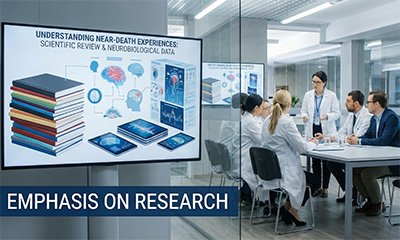
The NDERF search function is a filter-driven database explorer for researchers and readers interested in near-death experiences. With these new tools we can better explore answers to questions that were previously out of reach.
A major strength of this research is its global scope: standardized questionnaires are available in 37 languages, allowing experiencers to report in their native language. Sixteen languages are fully translated, enabling large-scale cross-language comparison, while twenty-one additional languages have growing translated collections that continue to expand.
NDERF search NDERF search provides opportunities for researchers globally to examine how diverse cultural contexts may shape differences in experiences and how they are described, while supporting large-scale comparison of recurring elements across languages and regions. Readers can access this information regardless of where or how the experiences occurred.
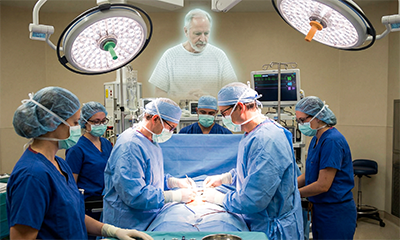
Consciousness Experiences
NDERF has teamed up with NoeticMap to bring together many forms of consciousness experiences collected over the years into a unified, exploratory framework. This collaboration extends beyond near-death experiences to include a wide spectrum of human experiences reported across cultures, countries, and life circumstances.
Through NoeticMap , visitors can read or listen to anonymized experiences, explore the individual elements that make up different types of experiences, and examine patterns that emerge across many accounts. Interactive tools and visualizations, including graphs and comparative views, allow users to see how experiences relate to one another and where similarities and differences appear.
NoeticMap also makes it possible to search for and find experiences similar to one’s own, helping individuals place their personal experience within a broader human context while supporting ongoing research into the nature of consciousness on a global scale.
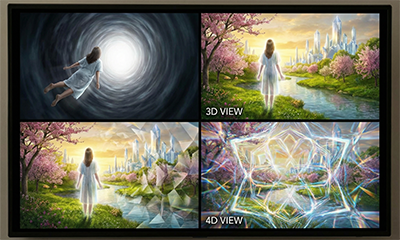
Implications
Exploring what this research suggests about consciousness, meaning, and human continuity.
- Are we more than our bodies?
- What is the nature of reality?
- How are consciousness and the brain related?
- Are similar patterns found across cultures, languages, and belief systems?
- What might these experiences imply about memory, identity, and perception?
- Which experiences come from the brain — and which might not?
- How might these findings influence medicine, caregiving, and end-of-life support?
- Could our world change if more people understood universal love and the continuity of life?
Why Include Other Consciousness Experiences?
Including related non-NDE experiences does not dilute near-death research. It strengthens it by allowing researchers to examine where different experience types converge or diverge. This makes it possible to identify which features are unique to near-death experiences and which reflect broader aspects of human consciousness, perception, or memory.
Comparative study across experience types supports clearer definitions, improved classification, and more rigorous analysis. Rather than assuming boundaries in advance, this approach allows those boundaries to be tested, refined, and better understood through evidence.
Some visitors will be excited to explore the full range of experiences available for study, while others may prefer to focus exclusively on near-death experiences. Both approaches are fully supported. The site makes it easy to select one or more experience categories to study or read about, allowing each visitor to engage according to their interests.
Additional Consciousness Experiences Studied
In addition to near-death experiences, this research framework includes a wide range of consciousness-related experiences.
You will find many experiences like this on NDERF.org. To isolate a particular class of experiences, go to NDERF search . You can scroll down the list and the classification(s) are on the top right top hand side of each experience in blue. You can also type the classification (for instance "NDE-Like") in the Text Search box at the top of the search page. The experiences with will display at the bottom after the Filters section.
NDERF search has a Text Search box. You either search for a word or set of words or you can go to the gray button "more filters.
You can also find classifications and related visualizations on NoeticMap , along with many other useful categories and graphs displayed.
Thie additional consciousness experiences section of NDERF.org is a work in progress. You may be directed to one of NDERF websites ADCRF.org or OBERF.org I will be integrating ADCRF.org and OBERF.org with the NDERF.org database so that people around the world can study and read all the experiences in different languages.
Premonitions / Waking Visions
Explore →Future-oriented perceptions, visions, or clairvoyant experiences.
Other
Explore →Experiences that do not fit established categories, including rare or anomalous phenomena.
Research Continuity
Over 25 years of data collection have shaped how near-death experiences are studied at NDERF.org.
As technology and scientific understanding evolved, the questionnaires were refined multiple times to focus on questions that produced the most relevant, reliable, and statistically meaningful data.
Today, more than 16,000 experiences are preserved across the three NDERF consciousness research websites. Most were submitted through structured questionnaires, with a smaller number shared as narrative accounts. Data from oberf.org and adcrf.org is currently being consolidated into the NDERF research framework.
Data Access Across Platforms
Experiences are being linked across systems to improve accessibility and comparison. Each account is connected to its original NDERF page, its entry in the NDERF search database, and its corresponding record on NoeticMap allowing seamless movement between platforms while maintaining data integrity.
Original submissions remain preserved for scientific study. Public-facing versions on the NDERF website are lightly edited for clarity, while the NDERF search database uses AI-assisted tools to streamline presentation. NoeticMap builds on the same underlying data and adds expanded analytical and exploratory features.
Translation & Global Research
Translations are essential for cross-cultural study. English versions allow consistent classification and comparison, while original-language submissions are preserved whenever possible. The NDERF Search system can automatically translate English experiences into 17 additional languages. We have 19 languages with ongoing translations, and 2 languages with only questionnaires.
Some languages currently benefit from human translation. For example, Farsi translations produced by native-speaking volunteers remain more accurate than AI-generated versions. As translation technology continues to advance, these limitations are expected to diminish.
Language Availability and Translation Status
The following overview summarizes how languages are currently supported across the NDERF research ecosystem. Experiences are collected and shared in many languages to support cross-cultural research and public access. This table outlines fully translated languages, active translation efforts, and languages with questionnaires available for new submissions.
Fully Translated Languages
All experiences in these languages are available across platforms. Click to see the list of languages.
Languages with Ongoing Translation
These languages contain translated experiences and continue to expand as additional submissions are processed.* Click to see the list of languages.
Questionnaire Available
These languages currently support new submissions, with translations planned as resources allow. Click to see the list of languages.
| Language | Status | Read All | Translator | Contribute |
|---|---|---|---|---|
| Macedonian | Questionnaire Only | — | — | Share Your Experience |
| Ukrainian | Questionnaire Only | — | — | Share Your Experience |
*Expanding large-scale translated experience collections involves infrastructure and processing costs. Donations may be designated to support the addition of a specific language.